


















20/07/2023
CCTP member E. Kiritsis' article on holographic reheating in cosmology has been highlighed on the cover of Physical Review Letters. More information can be found in news .
20/09/2021
Distinguished professor and CCTP member Dimitri Christodoulou, was awarded the Poincare Prize in Mathematical Physics. More information can be found in news .
1/08/2021
Professor T. Tomaras has unfortunately passed away due to a short illness. More information can be found in news .
19/03/2021
There is a faculty opening in High energy Physics and Cosmology at the Physics Departement of The University of Crete. More information can be found at Jobs .
11/03/2018
There is a tenured associate professor opening in High energy Physics and Cosmology at the Physics Departement of The University oc Crete. More information can be found at Jobs .
28/09/2015
CCTP member Vasilis Niarchos is the recipient of the first Messinian Prize in Science. More information at news .
21/09/2015
CCTP will host partly the ERC Grant, SM-GRAV. More information at news .
07/11/2014
A video was made recently by "Aristeia Academy" in order to give prominence to the work of CCTP center, more at news .
05/6/2014
Crete is well ranked in the Leiden ranking, more at news .
07/5/2014
University of Crete has made it to the list of the best 100 Universities that are under 50 years' old in the world for the third consecutive year, at the 48th place! More at news .
2025 Tomaras Lectureship
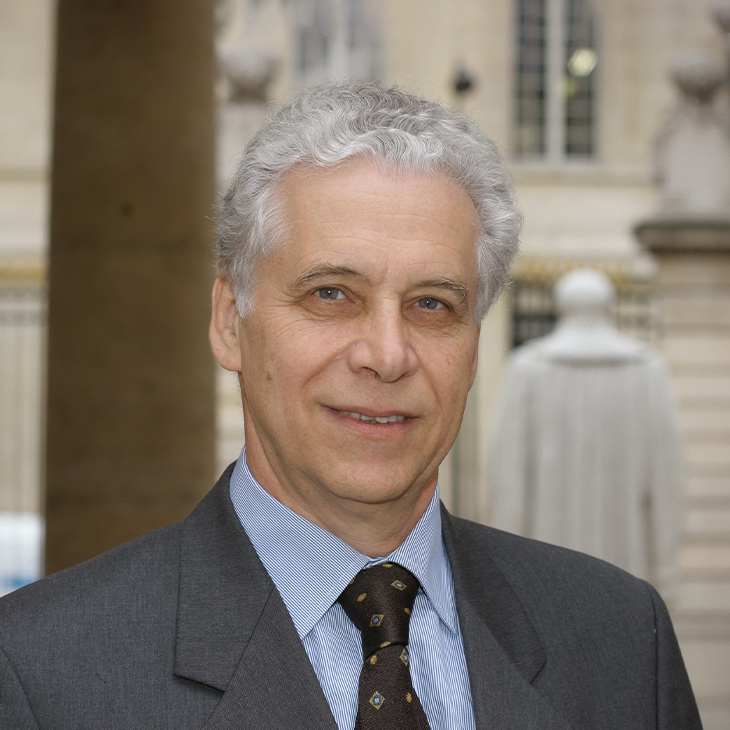
"GABRIELE VENEZIANO"
CERN and COLLEGE de FRANCE
The 2025 “Theodore Tomaras Physics Colloquium” has taken place on October 16, Thursday, 2025, at 17:15 at the N. Petridis auditorium of the Mathematics Department of the University of Crete.
The title of the lecture was:
“Peeping beyond the big-bang: is it science fiction” (video 1) (video 2)
Abstract: The big bang does not describe anymore the start of time and everything else in modern cosmology. It will be argued that quantum mechanics plays a crucial role in the period of the universe before the big bang. Possible present and future experiments and observations will be discussed, that may allow to probe the physics of the pre-big bang era. The role of gravitational waves is central in such experiments.
SHORT CURRICULUM VITAE OF G. VENEZIANO
Prof. Gabriele Veneziano is considered as the father of string theory.
He is Italian and did his undergraduate studies in Firenze. He obtained his PhD from the Weizmann Institute of Science in 1967. From 1968 to 1972 he worked as a postdoctoral researcher at the Massachusetts Institute of Technology (MIT). From 1972-1976 he obtained the Amos de Shalit chair of physics at the Weizmann Institute of Science.
From 1976 and until his retirement in 2007, he was permanent member of the Theory Division at CERN. He served as its director during the 1994-1997 period. Since then, he is an honorary member of the Division.
During the period 2004-2013, he had the prestigious chair of theoretical physics at the Collège de France in Paris, where he is an honorary member.
More recently he has served as Global Distinguished Professor at New York University.
Gabriele Veneziano put the foundations of string theory in 1968, in order to describe the strong interactions. He proposed the so-called Veneziano amplitude, that describes scattering in the strong interactions. This amplitude was very soon shown to be produced by a string theory.
String Theory has been studied until today and has proven to be a treasure trove of new and radical ideas in theoretical physics (like the holographic correspondence) or in mathematics (like topological quantum field theories).
G,. Veneziano has made many seminal contributions also in Quantum Field Theory. In 1979 in collaboration with E. Witten he has solved the famous $\eta’$ mass problem. This solution has provided a breakthrough in the understanding of non-perturbative phenomena due to Instantons in Quantum Chromodynamics.
He was the first (with S. Yankielowicz) in 1982 to be able to solve exactly the low-energy dynamics of a quantum field theory in four dimensions that is strongly coupled (supersymmetric Yang-Mills theory) .
He is a pioneer in the study of scattering at very high energies in quantum gravitational theories and string theories, and he has developed novel techniques that are used till today.
In 1991, motivated by the effective gravitational theory of string theory he has proposed the “pre-big-bang cosmology” theory. In this theory, time and the universe does not start at the big bang but exists before.
More recently, he modelled with his collaborators, tetraquark and pentaquark states, that had been observed in CERN experiments, using ideas from string theory.
Prof. Veneziano has received numerous awards and distinctions during his career that recognize his deep contributions to theoretical physics. Some of them are:
Prof. Veneziano has received numerous awards and distinctions during his career that recognize his deep contributions to theoretical physics. Some of them are:
The Pomeranchuk prize in 1999
The Heineman prize in 2004
The Enrico Fermi prize in 2005
The Albert Einstein medal in 2006
Τhe Tomassoni prize in 2009
Τhe James Joyce prize in 2009
The Dirac medal in 2014
